Discover Crete
History, culture, arts and food from the island we call home.
Crete isn't just the backdrop to our wedding. It's home. We live in Heraklion, on an island with thousands of years of history, its own dialect within the language, its own songs, and a cuisine studied around the world. What follows is a short, sourced tour for anyone who'd like to know a little more about the place before they visit.
Beyond its monuments, Crete has a living culture: hospitality, craft and custom that are still very much part of everyday village life, and a literary and painterly tradition that reaches far beyond the island. You'll meet the people behind it in People of Crete.
Craftsmanship
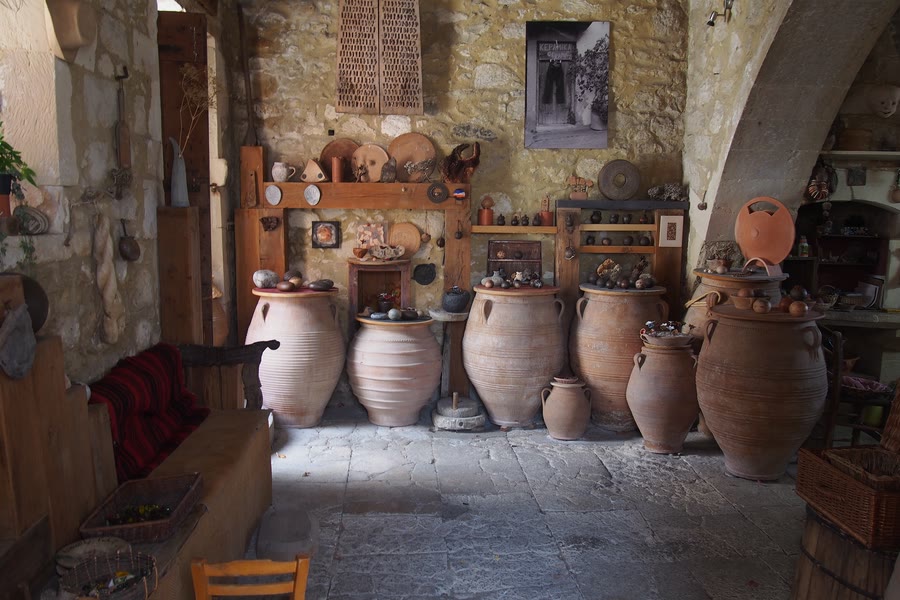
Pottery (the villages of Thrapsano and Margarites are known for it, where potters still shape clay much as the Minoans did), weaving (a tradition kept alive in Kritsa), wood carving and leatherwork are all still practised across the island.
Cretan Knife-Making
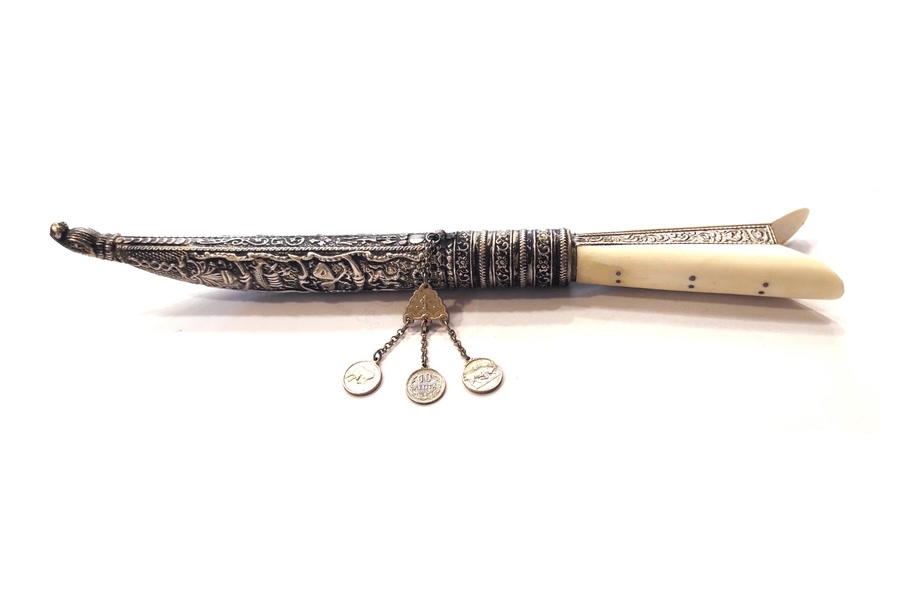
Knife-makers in Chania and Heraklion turn steel into the famous Cretan knife, traditionally the inseparable companion of every Cretan. Engraved scenes and poems adorn the blades.
Cretan Renaissance & Erotokritos
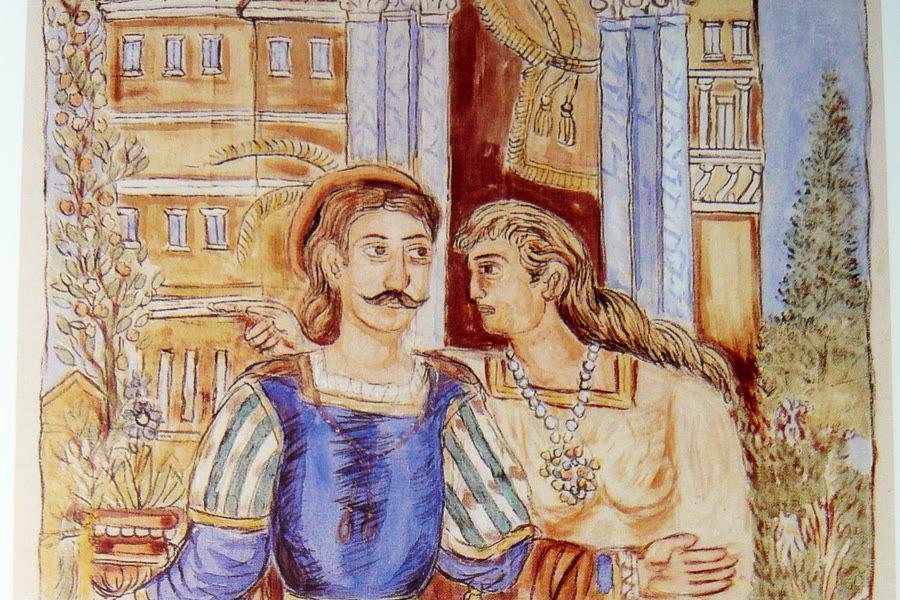
Under Venetian rule, Candia nurtured a literary and artistic flowering known as the Cretan Renaissance. Its masterpiece is Vitsentzos Kornaros's Erotokritos: 10,012 rhyming fifteen-syllable verses in the Cretan dialect, still read and performed today.
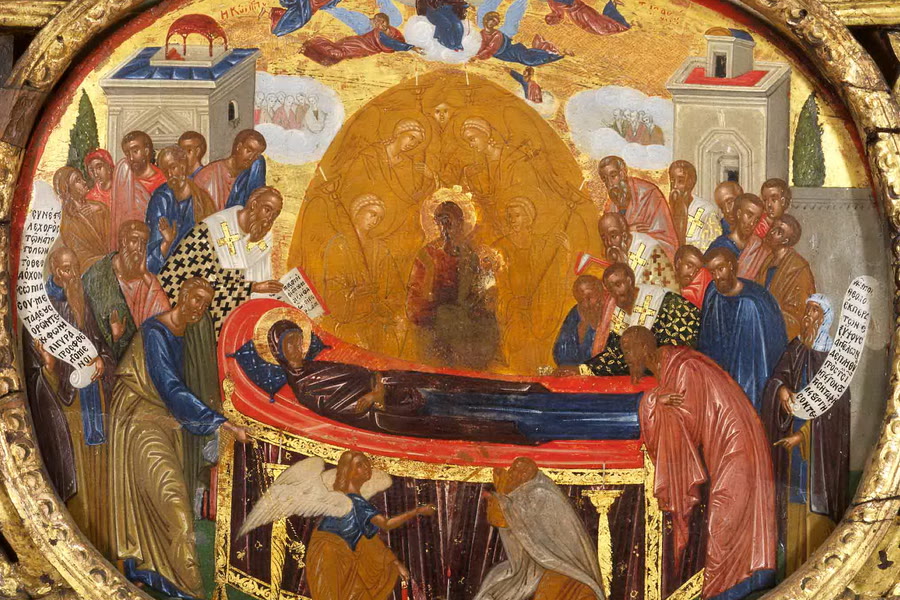
Cretan School of Iconography
The Cretan School of Iconography flourished in Venetian-era Candia. It's where Domenikos Theotokopoulos, later known as El Greco, trained before leaving for Venice and then Toledo.
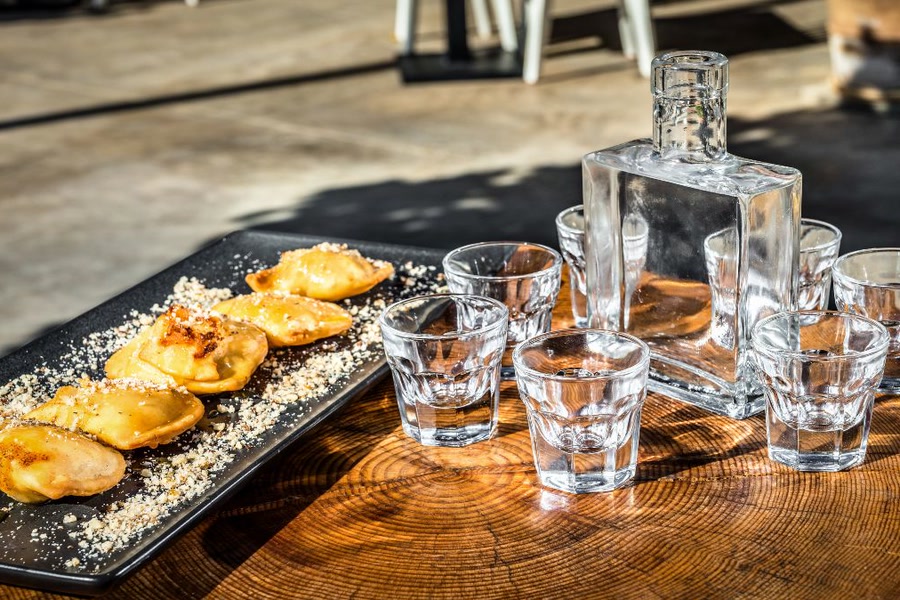
Filoxenia (Hospitality)
Cretan hospitality isn't just politeness. It's custom. Tsikoudia is offered as a welcoming or parting gesture, and a stranger is met with generosity almost as a matter of principle.
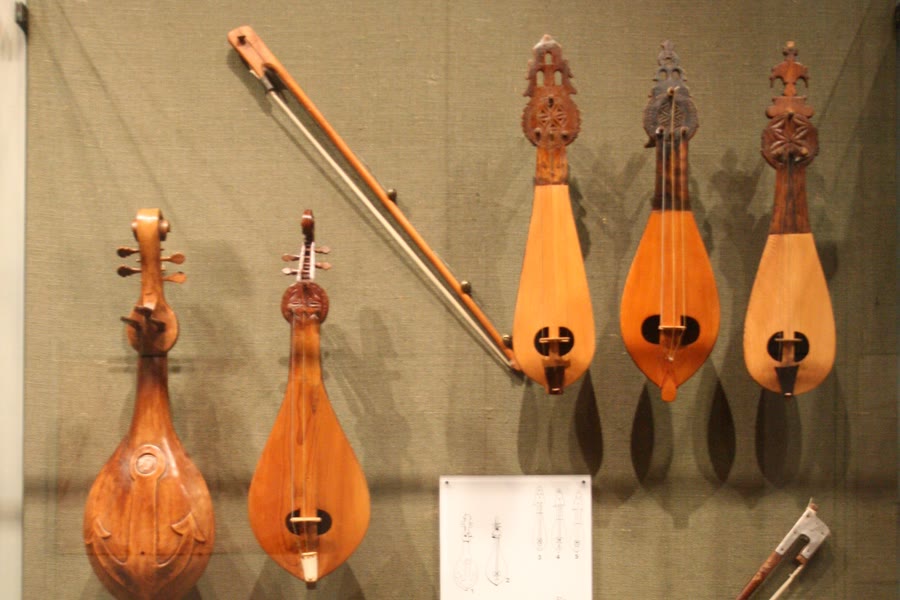
Handmade Lyras & Laoutos
The lyra and laouto that drive Cretan music are still made by hand by local instrument makers, with a long tradition in Vori, Zaros, Rethymno, Neapolis and Kritsa. A lyra is carved from a single piece of aged wood, traditionally local walnut or mulberry, with a soundboard of seasoned softwood. The laouto, a long-necked lute with four double strings, accompanies it. In Rethymno, the Stagakis family workshop, now in its third generation, also runs a small Cretan Lyra Museum; Dimitris Stagakis is credited with the first modern form of the lyra in the 1940s.
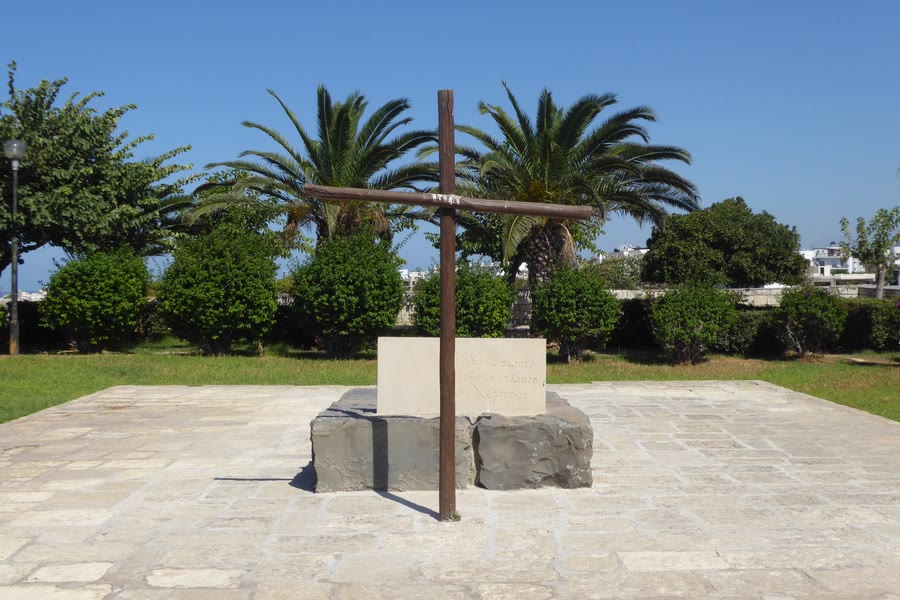
Kazantzakis & modern literature
Heraklion-born Nikos Kazantzakis is Crete's best-known modern writer, with works such as Zorba the Greek, The Last Temptation of Christ and the epic Odyssey: A Modern Sequel. His tomb sits on the Venetian walls of his home town.